
Secure the pipeline without slowing the pipeline.
SSH, repos, CI/CD, ticketing, staging: least-privilege access that developers don't feel and attackers can't find.
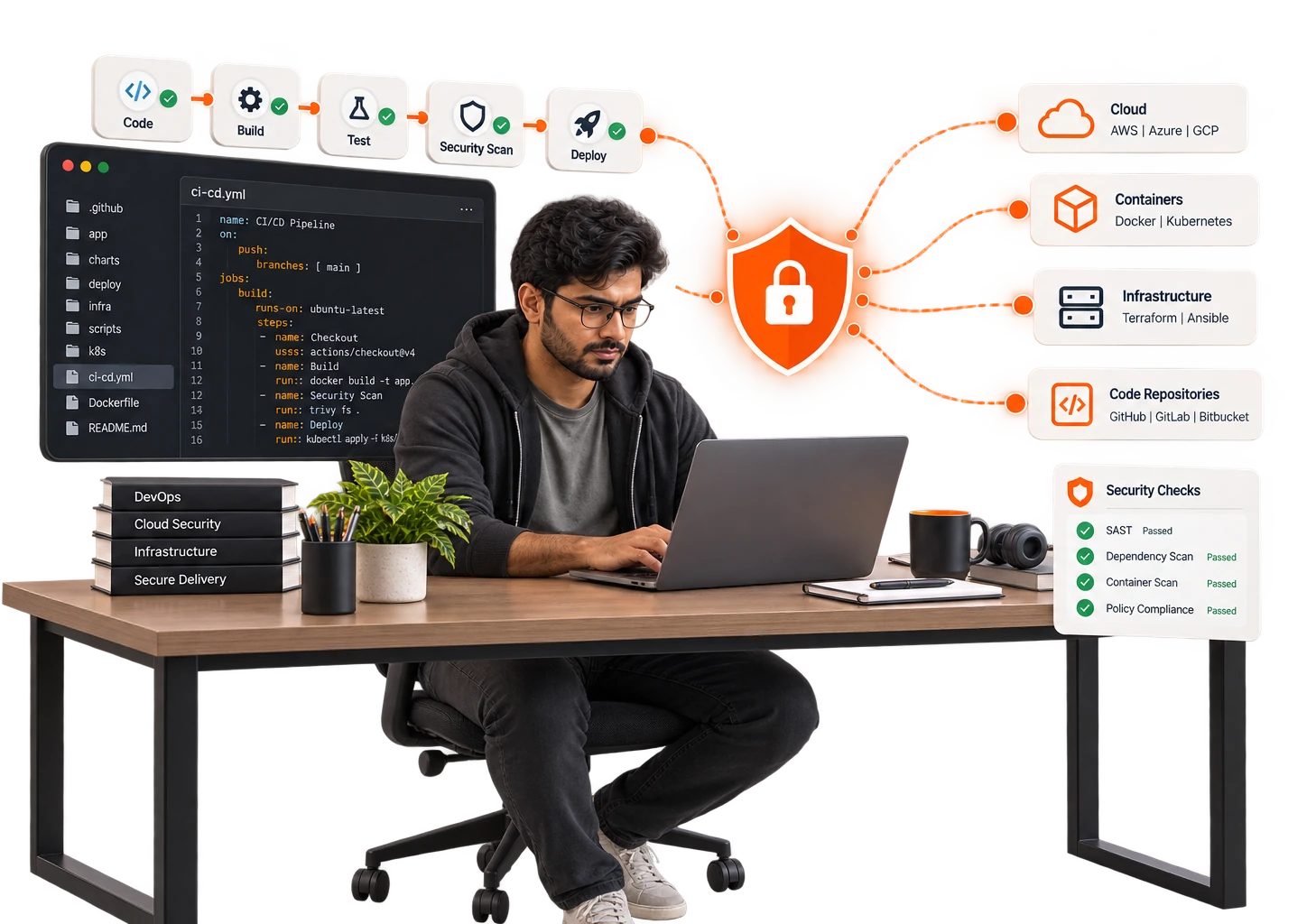
A dev toolchain is a breach map.
developer access
Source code sits in Git, deploy keys sit in the CI/CD servers that build and ship your software, and server access runs over SSH. Historically all of it has been reachable from the internet, because developer friction is the one cost engineering leaders refuse to pay.
- The tools go darkGit, Jenkins, Jira, WordPress and the staging estate sit behind gateways with no public address, so a scan of your ranges finds nothing to attack.
- The workflow does not changeDevelopers reach them through the same terminal commands and the same browser tabs as before: the portal brokers SSH and web access transparently.
- The checks ride alongMulti-factor authentication and device posture are verified on the request rather than performed as a login ritual, so nobody feels them.
- Production is not next door to stagingEach environment becomes a separately-policied tile rather than an adjacent host, so reaching one says nothing about reaching the other.
What the portal actually covers.
- SSHCredentialed, policied, recorded access to servers, validated per request, with no standing open port.
- WEB & SAAS TOOLSJira, GitLab, Jenkins, WordPress and internal web tools through the portal: invisible to the internet, gated on identity and context.
- RDPWindows build and admin boxes with single sign-on and MFA layered on, recorded where the access is privileged.
- DB ACCESSDirect policied access for the data layer. PostgreSQL, MSSQL and SQL Server are generally available; Oracle and Elasticsearch are in beta; ClickHouse and MongoDB are in alpha.
- SEGMENTATIONApp-specific tunnels: the intern's staging access and the SRE's production access are different policies, not different subnet hopes.
- PRIVACY FIRSTCode and data flow direct, never through vendor infrastructure. For IP-sensitive teams this is the deciding line.
Secure the pipeline without slowing the pipeline.
SSH and RDP without the subnet
Credentialed, policied, recorded access to named servers — validated per request, with no standing open port. The intern's staging access and the SRE's production access are different policies, not different subnet hopes.

alen.joseph · it-operations · one session at a time

- prod-bastionSSH · 22sealed
- build-farmRDP · 3389sealed
- metrics-dbTCP · 5432sealed
- staging-apiTCP · 8443sealed
- ci-runnerSSH · 22sealed
- git-mirrorSSH · 22sealed


Ship at the same speed.Vanish from the internet.
Three things change the week the toolchain moves behind the portal.
Nothing to scan
The toolchain stops appearing on the internet, so the reconnaissance that precedes most attacks returns nothing.
Workflow intact
Least privilege arrives without changing a command a developer already types.
Replayable record
Privileged activity is logged and recorded, and exports to the SIEM (the security monitoring platform your analysts already watch).
devops security, answered.
Tap a question. If yours is not here, a specialist can answer it.
Talk to a specialist//Ready when you are//
Bring one repo, one build server, one production host.
We'll broker access to all three in the demo, then read back what the log says about it.
Regulated, air-gapped, or on-premise? See deployment options