Multi-Factor Authentication (MFA) for IPO Security and Compliance

Preparing for an Initial Public Offering (IPO) is a defining moment for any organisation. Beyond financial performance and market positioning, one area that receives intense scrutiny during IPO readiness is cybersecurity and compliance.
Investors, auditors, and regulators expect companies to demonstrate strong security controls to protect sensitive financial, customer, and operational data. Among all cybersecurity measures, Multi-Factor Authentication (MFA) stands out as one of the most critical and effective controls for IPO security.
MFA not only strengthens access security but also plays a key role in meeting regulatory and compliance requirements such as SOX, ISO 27001, SOC 2, GDPR, and PCI-DSS.
Why MFA Is Critical During IPO Preparation
Going public significantly expands an organisation’s risk exposure. At the IPO stage, companies typically handle:
- Confidential financial reports
- Investor data and valuation documents
- Legal and regulatory filings
- Board-level communications
- Customer and partner information
At the same time, access to systems increases across:
- Finance teams
- Legal advisors
- External auditors
- Investment bankers
- Third-party consultants
Relying only on passwords in this environment creates serious vulnerabilities. Credentials are easily compromised through phishing, malware, and data breaches.
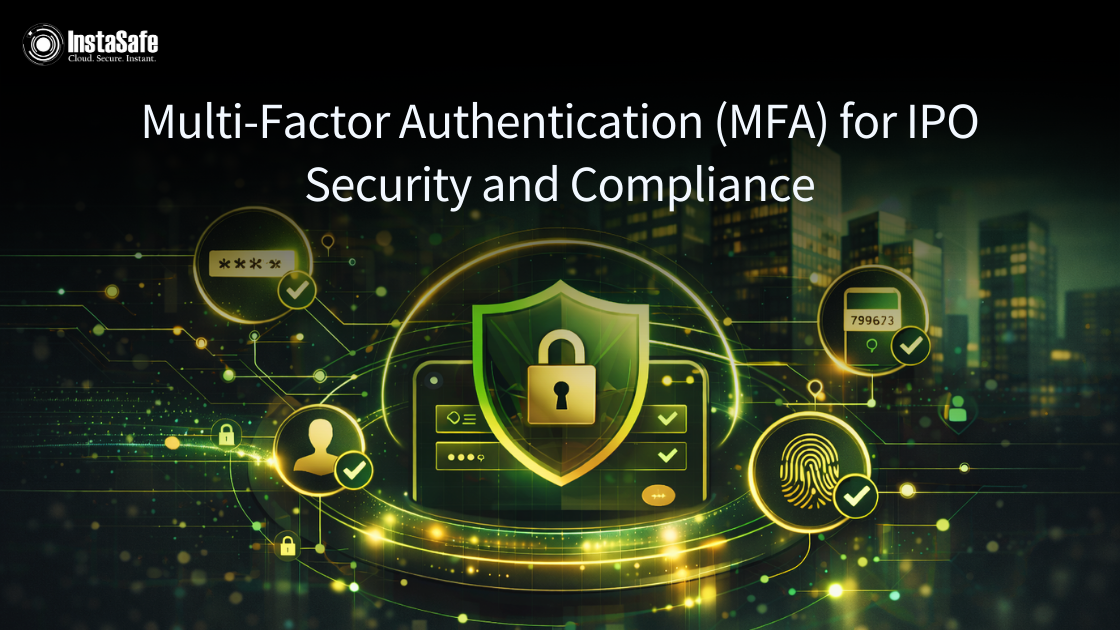
MFA reduces this risk by requiring users to verify their identity using two or more authentication factors, such as:
- Something they know (password or PIN)
- Something they have (OTP, token, mobile device)
- Something they are (biometrics)
Even if passwords are stolen, attackers cannot gain access without the second factor.
How MFA Supports IPO Compliance Requirements
Regulatory compliance is a core pillar of IPO readiness. Most frameworks require strong authentication and access controls - and MFA directly satisfies these expectations.
1. SOX (Sarbanes-Oxley Act)
SOX focuses on protecting financial reporting systems and ensuring data integrity.
MFA helps SOX compliance by:
- Securing access to financial systems
- Protecting privileged accounts
- Preventing unauthorised modifications
- Creating audit trails for access events
This ensures financial data remains accurate, controlled, and tamper-proof.
2. ISO 27001
ISO 27001 mandates strong identity and access management controls.
MFA aligns with ISO requirements by:
- Strengthening user authentication
- Enforcing secure access policies
- Reducing risk of identity compromise
- Supporting continuous risk management
MFA acts as a measurable and auditable security control under ISO audits.
3. SOC 2
SOC 2 focuses on protecting customer data across cloud and SaaS platforms.
MFA supports SOC 2 by:
- Securing cloud application access
- Enforcing role-based access
- Preventing unauthorised user activity
- Providing verifiable security controls
For IPO-bound SaaS and IT companies, SOC 2 compliance is often mandatory for investor confidence.
Protecting Sensitive IPO Data with MFA
IPO environments are highly sensitive because they involve:
- Financial projections
- M&A discussions
- Internal risk disclosures
- Intellectual property
- Strategic business plans
MFA ensures:
- Only authorised users access critical systems
- Third-party users are verified
- Privileged access is tightly controlled
- Remote access is secured
This drastically reduces the risk of:
- Insider threats
- Credential misuse
- Data leakage
- Regulatory violations
MFA for Remote and Third-Party Access
IPO preparation often involves multiple external stakeholders:
- Auditors
- Legal firms
- Investment banks
- Consultants
These users access systems remotely from outside corporate networks.
MFA adds a strong security layer by:
- Verifying external identities
- Protecting cloud and SaaS access
- Preventing unauthorised connections
- Reducing third-party risk exposure
This is especially important in hybrid and remote work environments.
MFA as a Foundation for Zero Trust IPO Security
Modern IPO security strategies are shifting toward Zero Trust Architecture, where no user or device is automatically trusted.
In a Zero Trust model:
- Every access request is verified
- Identity is continuously validated
- Least privilege is enforced
- Security is context-aware
MFA becomes the first and most essential layer of Zero Trust, ensuring identity is always verified before access is granted.
Implementing MFA Without Business Disruption
A common concern is that MFA may slow down operations. However, modern MFA solutions are:
- Adaptive and risk-based
- Integrated with cloud apps
- User-friendly and seamless
- Passwordless where possible
With platforms like InstaSafe’s Secure Identity Cloud, organisations can:
- Deploy MFA across cloud and on-prem systems
- Enable single sign-on (SSO)
- Apply contextual access policies
- Maintain high user productivity
This ensures strong security without compromising user experience.
Business Benefits of MFA for IPO Readiness
Beyond compliance, MFA delivers real business value:
- Increases investor trust
- Strengthens security posture
- Reduces breach risk
- Supports audit readiness
- Enhances company valuation
- Improves governance maturity
MFA demonstrates that the organisation takes cybersecurity seriously - a key factor in modern IPO evaluations.
Conclusion: MFA Is a Strategic IPO Requirement
For organisations preparing to go public, cybersecurity is no longer optional - it is a fundamental business requirement.
Multi-Factor Authentication:
- Protects sensitive IPO data
- Satisfies regulatory compliance
- Reduces cyber risk
- Strengthens Zero Trust adoption
- Builds investor confidence
In today’s digital-first world, MFA is not just a security tool - it is a strategic enabler for IPO success.
By implementing MFA as part of an identity-first security framework, organisations can ensure they are not only IPO-ready, but future-ready.