From Passwords to Identity: Modern Access Security for Fintech Organizations

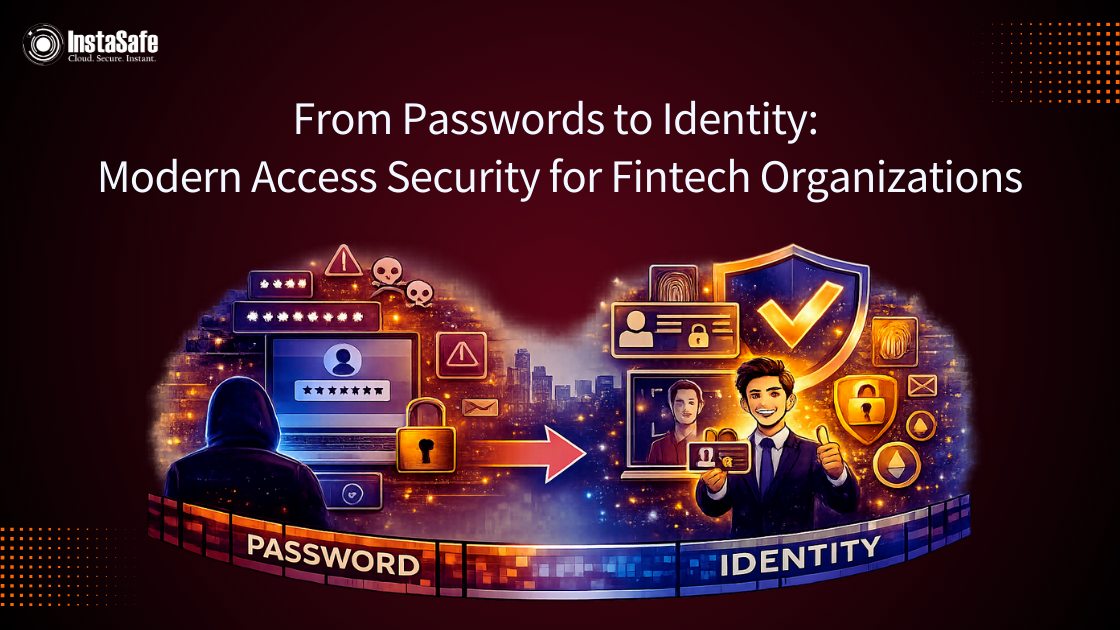
The Fintech revolution has transformed how the world interacts with money. Digital banking, mobile payments, embedded finance, and open APIs have made financial services faster and more accessible than ever before. However, this innovation has also expanded the attack surface dramatically.
At the heart of most security breaches in Fintech lies a simple but critical weakness: password-based authentication.
In a world where financial data, transaction systems, and customer identities are constantly targeted, relying solely on passwords is no longer viable. Fintech organizations must move beyond passwords toward identity-first access security to protect customers, employees, and partners.
Why Password-Based Security Fails in Fintech
Passwords were never designed to secure modern, cloud-first financial ecosystems. Yet many organizations still rely on them as the primary authentication mechanism.
This creates several risks:
1. Password Reuse
Users frequently reuse passwords across platforms. If one system is breached, attackers can use stolen credentials to access financial applications.
2. Phishing Vulnerabilities
Passwords are easily captured through phishing emails, fake login pages, and social engineering attacks.
3. Credential Stuffing Attacks
Automated bots use previously leaked credentials to gain unauthorized access to customer accounts.
4. Insider Threats
Shared credentials and weak access controls make it difficult to monitor and restrict internal access.
For Fintech companies handling sensitive financial transactions, these weaknesses can lead to:
- Account takeovers
- Fraudulent transfers
- Regulatory violations
- Customer trust erosion
Passwords alone are simply not strong enough to defend against modern cyber threats.
The Shift to Identity-First Security
Modern access security is no longer about protecting networks -- it is about protecting identities.
Identity-first security focuses on verifying:
- Who the user is
- What they are allowed to access
- From where they are accessing
- On what device
- Under what risk conditions
Instead of assuming trust after a single login, identity-first security continuously evaluates access requests.
This approach aligns with Zero Trust principles: Never trust. Always verify.
How Identity-First Security Strengthens Fintech Protection
1. Strong Authentication with MFA
Multi-Factor Authentication (MFA) adds an additional layer beyond passwords. Even if credentials are stolen, attackers cannot access systems without secondary verification such as:
- One-time passwords
- Push authentication
- Biometrics
- Hardware tokens
This significantly reduces account takeover risks.
2. Least Privilege Access
Identity-first security ensures users only access what they truly need.
For Fintech organizations, this means:
- Developers cannot access production financial data unnecessarily
- Third-party vendors receive limited access
- Executives and finance teams have tightly controlled privileges
This minimizes internal risk and prevents lateral movement during breaches.
3. Context-Aware Access Controls
Modern identity systems analyze context such as:
- Device health
- Geographic location
- Time of access
- Behavioral patterns
If unusual behavior is detected, additional verification is triggered or access is denied.
This proactive model protects against fraud and suspicious login attempts.
4. Securing APIs and Open Banking
Fintech platforms rely heavily on APIs for:
- Payment processing
- Third-party integrations
- Data sharing
Identity-first access ensures that:
- Every API request is authenticated
- Third-party access is verified
- Unauthorized connections are blocked
This is critical in open banking environments where data sharing is constant.
Identity-First Security for Customers, Employees, and Partners
Customers
Protects online banking and mobile payment accounts from phishing and credential stuffing attacks.
Employees
Secures remote and hybrid workforce access without relying on vulnerable VPN-based systems.
Partners and Vendors
Enforces controlled, monitored access for third-party integrations.
Identity becomes the unified security layer across the entire Fintech ecosystem.
Compliance and Regulatory Alignment
Fintech organizations must comply with frameworks such as:
- PCI-DSS
- GDPR
- ISO 27001
- SOC 2
Identity-first security supports compliance by:
- Enforcing strong authentication
- Maintaining detailed access logs
- Implementing least-privilege access
- Providing centralized audit visibility
This simplifies regulatory audits and demonstrates strong governance.
How InstaSafe Enables Identity-First Access for Fintech
InstaSafe delivers a Zero Trust, identity-first access platform that allows Fintech organizations to:
- Replace risky VPN-based access
- Implement adaptive Multi-Factor Authentication
- Secure cloud and on-prem applications
- Protect APIs and customer portals
- Centralize identity governance
- Monitor user behavior in real time
By shifting from passwords to intelligent identity verification, InstaSafe helps Fintech companies reduce fraud risk while maintaining seamless user experience.
Conclusion: Identity Is the New Security Perimeter
In the modern Fintech landscape, passwords are no longer enough. The growing sophistication of cyber threats demands a more resilient and intelligent approach to access security.
Identity-first security transforms authentication from a static login process into a dynamic, risk-aware protection mechanism. It safeguards financial transactions, protects customer trust, and strengthens compliance readiness.
For Fintech organizations looking to stay secure in an increasingly digital economy, the future of access control is clear:
Move beyond passwords. Secure identity. Enable trust.